
The Making of a General – CIA A-12 Pilot Mele Vojvodich
- By tdbarnes
 CIA A-12 PILOT MGen MELE VOJVODICH, JR began his career as a private in the USAAF (US Army Air Forces), earning his pilot wings in the aviation cadet program at Nellis Air Force Base, Nev., in August 1950.
From August 1950 to July 1952, General Vojvodich was an F-84 pilot and aircraft commander at Turner Air Force Base, Ga. His next tour of duty was in South Korea as an F-80 and F-86 pilot and operations officer for the 15th Tactical Reconnaissance Squadron. While there, he flew 125 combat missions.
It was a photo mission in the Korean War that got Vojvodich invited into the Central Intelligence Agency’s secret Blackbird program a decade later.
Flying a souped-up RF-86 Sabrejet, he entered Communist China north of the Yalu River with his escort fighters staying south of that demarcation point. Captain Vojvodich was a nearly unbelievable 350 nautical miles north of the Yalu, deep into Manchuria, when he realized being low on fuel. He also knew that he’d found what he was looking for and got it on film – Ilyushin-28, Russian-built bombers with nuclear weapons capability, parked in China.
At first, he had only four MiG-15s on his tail, which soon became two dozen bandits chasing him as he sought to join his escort.
Flying on fumes, he crossed the Yalu River only to learn that his six fuel-short fighter jet escorts had bugged out and were in a landing pattern, leaving him alone to wing it back to base. Fortunately, the MiGs gave up the chase when he crossed the Yalu.
Instead of welcoming him back, his colonel was still chewing on Vojvodich when he received a summons to Headquarters and to bring Captain Vojvodich with him.
The summons solidified the colonel’s fear that Vojvodich’s deep thrust into China would end both their careers and probably earn Vojvodich a court-martial. The colonel was still giving Capt Vojvodich a reaming when Vojvodich spilled his pipe tobacco embers in the colonel’s staff car on the way to Hqs, setting the seat on fire. It got worse. Much worse.
(For those who don’t know, in the 1950s, the Koreans hauled human feces in oxen-drawn “honey-wagons” to the rice paddies and used “honey-buckets” to spread it as fertilizer for the rice. I recall the smell carrying to my troopship moored a mile from shore in the Inchon Harbor.)
Horrified, Vojvodich jumped out of the vehicle and into a rice paddy where he grabbed a befuddled peasant woman’s “honey bucket” and dashed its smelly contents into the colonel’s car to extinguish the smoldering blaze. One can only imagine the rest of the trip to Headquarters was.
To both their surprise, when they arrived, the brass, having seen Vojvodich’s film of the Ilyushins, was delighted. The colonel got promoted to brigadier general, and Vojvodich got a medal and a longtime interest in strategic reconnaissance.
Fast forward ten years to the Central Intelligence Agency sheep-dipping Vojvodich from the Air Force to become an Agency A-12 pilot at Area 51.
 While a pilot for the CIA’s Project OXCART at Groom Lake, Vojvodich was seven seconds into a functional check flight (FCF) of A-12 (60-6929 / 126) on 28 December 1965 when he realized that Lockheed had incorrectly wired the Stability Augmentation System (SAS), causing the plane to pitch down instead of up during liftoff. Unable to control the aircraft, he somehow ejected while only 100 feet above the runway and, seconds later, landed quite close to where his plane crashed. It was about dusk, and the fire trucks were on the scene quickly, one of the fire trucks almost running over Vojvodich as he gathered up his parachute.
(A similar accident occurred when the first production Lockheed F-117 was flown on 20 April 1982 by Bob Ridenaeur. Lockheed had incorrectly hooked up its control system. Ridenaeur survived the accident but had injuries severe enough to remove him from flight status.)
At the time of Mele’s crash, Col Slip Slater, commander of the 1129th SAS at Groom Lake, was in California visiting his daughter during the Christmas holiday, leaving Colonel Amundson, the Oxcart Detachment Deputy Commander in command at the facility.
Maj Harold Burgeson was on duty at the Ops building when the accident occurred. Hearing that Mele had just crashed, he headed for the Ops vehicle at a dead run. Just as he reached the outside gate, Col Holbury screeched to a halt in his staff car, picked him up, and they headed to the site together. CIA Project Pilot Dennis Sullivan was in another station wagon monitoring the take-off and narrowly missed Mel while rushing to the crash site.
Maj Roger Andersen was on duty in the Command Post, monitoring the tower frequencies during take-off. As soon as he heard that the aircraft crashed, he ran to the front of the operations building, jumped into one of the station wagons, and headed out on the lake bed.
Heavy black smoke and orange flames boiled from the wreckage until the fire trucks gained control. The very low volatility of the special JP-7 fuel required injecting triethylborane (TEB) into the engine to initiate combustion and allow afterburner operation in flight. Fuel containing TEB spilled over the crash area flowing out onto the lake bed and spread under a thin layer of ice where it burned with a glowing, eerie green flame as darkness set in at Groom Lake.
Mele had sprained his ankle when he bailed out and when he returned to Los Angeles, his wife, Carol, asked him why he was limping. He told her that he had sprained his ankle playing tennis.
Maj. Burgeson was a member of the accident board where the Lockheed team determined that the Lockheed flight engineer had reversed the SAS connections, causing Pitch and Yaw signals misinterpretation. A few days later, Col. Slater, the project pilots,  Major Burgeson and Bill Park went to Beale to check the cable reversal in their new simulator. Accompanying them were Mele and a Col from Wright Pat. Bill Park took the first flight in the simulator with the cables reversed while the rest waited in an adjacent room. Bill Park had a tremendous sense of humor, and when he returned, he winked at Burgeson then remarked that it was a rough ride but flyable. Burgeson then took his flight, and when he returned, he continued the charade with a similar remark. According to Burgeson, Mele looked so crestfallen that they burst into laughter and confessed that they had both crashed in the simulator. It turned out that all the pilots failed recovery in the simulator. Vojvodich maintained to his death that he survived the incident because of his being extra alert because of a premonition that he’d experienced the previous night.
At Area 51, the Air Force worked for the CIA, reporting only to BGen Jack Ledford, the Office of Special Activities Director, under Dr. Albert “Bud” Wheelon, Deputy Directorate for Science and Technology, DD/S&T at the CIA for Project Oxcart at Area 51.
When Mele Vojvodich bailed out on take-off, BGen Ledford and Dr. Wheelon at CIA immediately flew to Los Angeles and picked up Kelly Johnson en route to Area 51.
On the way to Area 51, Johnson challenged the CIA’s operational pilots’ quality, automatically blaming Vojvodich for crashing the plane on its maiden flight. General Ledford, known for supporting his people, took issue. The matter ended with Wheelon breaking up a fistfight between General Ledford and Kelly Johnson in the aircraft as they headed to Groom Lake.
It turned out that Kelly Johnson’s people caused the crash by reversing the cables to the two augmentation rate gyros on the Vojvodich plane.
 (DS&T Dr. Wheelon, former Area 51 Special Projects TD Barnes, former CIA pilot Frank Murray, and former Area 51 Ops officer Roger Andersen attended General Ledford’s funeral in Tucson, Arizona, where Dr. Wheelon told this story as part of his eulogy for the general.)
In early 1967, the CIA deployed Vojvodich and five other pilots to Kadena from Groom Lake, Nevada, for Operation Black Shield to provide photographic coverage of North Vietnam. On 31 May 1967, Mele Vojvodich flew A12 #937 out of Kadena, Okinawa at Mach 3.1, 80,000 feet altitude, on the First Operational Black Shield Mission. Over Hanoi, Vojvodich photographed 70 of the known 190 SAM missile sites. A Soviet-supplied acquisition radar tracked him over North Vietnam, but the SAM site was unsuccessful with the Fan Song guidance radar used to home the missile to the target.
In 1968, at a ceremony at Area 51, the CIA awarded Vojvoich and the other five Operation BLACK SHIELD pilots the Intelligence Star for Valor.
In October 1968, he was named chief of Atmospheric Weapons Division, Aerospace Defense Command headquarters at Ent Air Force Base, Colo.
 Following graduation from the National War College in 1971, General Vojvodich became Director of operations for the 67th Tactical Reconnaissance Wing at Bergstrom Air Force Base, Texas. He then transferred to Thailand in March 1972. He served successively as deputy commander for operations, vice commander, and commander of the 388th Tactical Fighter Wing at Karat Royal Thai Air Force Base. He flew 135 combat missions in F-4s while in Southeast Asia.
Upon returning to the United States in August 1973, he served as deputy chief of staff for tactical analysis, Tactical Air Warfare Center, Eglin Air Force Base, Fla. In August 1974, the general transferred to Headquarters US Air Force as chief, Tactical Forces, and Airlift Division, Directorate of Programs, Office of the Deputy Chief of Staff, Programs and Resources. In August 1977, he became deputy chief of staff, technical training at Headquarters Air Training Command, Randolph Air Force Base, Texas. He was initially assigned to the Office of the Deputy Chief of Staff for Manpower and Personnel at Air Force headquarters in August 1980 as the Director of Manpower and Organization. In March 1981, he became the Director of Personnel Programs.
The general was a command pilot with 6,000 flying hours. His military decorations and awards include the Distinguished Service Cross, Distinguished Service Medal, Legion of Merit with oak leaf cluster, Distinguished Flying Cross with four oak leaf clusters, Meritorious Service Medal, Air Medal with 13 oak leaf clusters, Joint Service Commendation Medal, Air Force Commendation Medal, and Army Commendation Medal.
Vojvodich received a promotion to major general on 1 May 1980, with a date of rank of 1 July 1976. Topping out his military career, he served as Assistant Deputy Chief of Staff for Manpower and Personnel, Headquarters US Air Force, Washington, DC, from September 1982 to the time of his retirement.
Major General Mele Vojvodich was buried at the Fort Sam Houston National Cemetery, San Antonio, Texas.
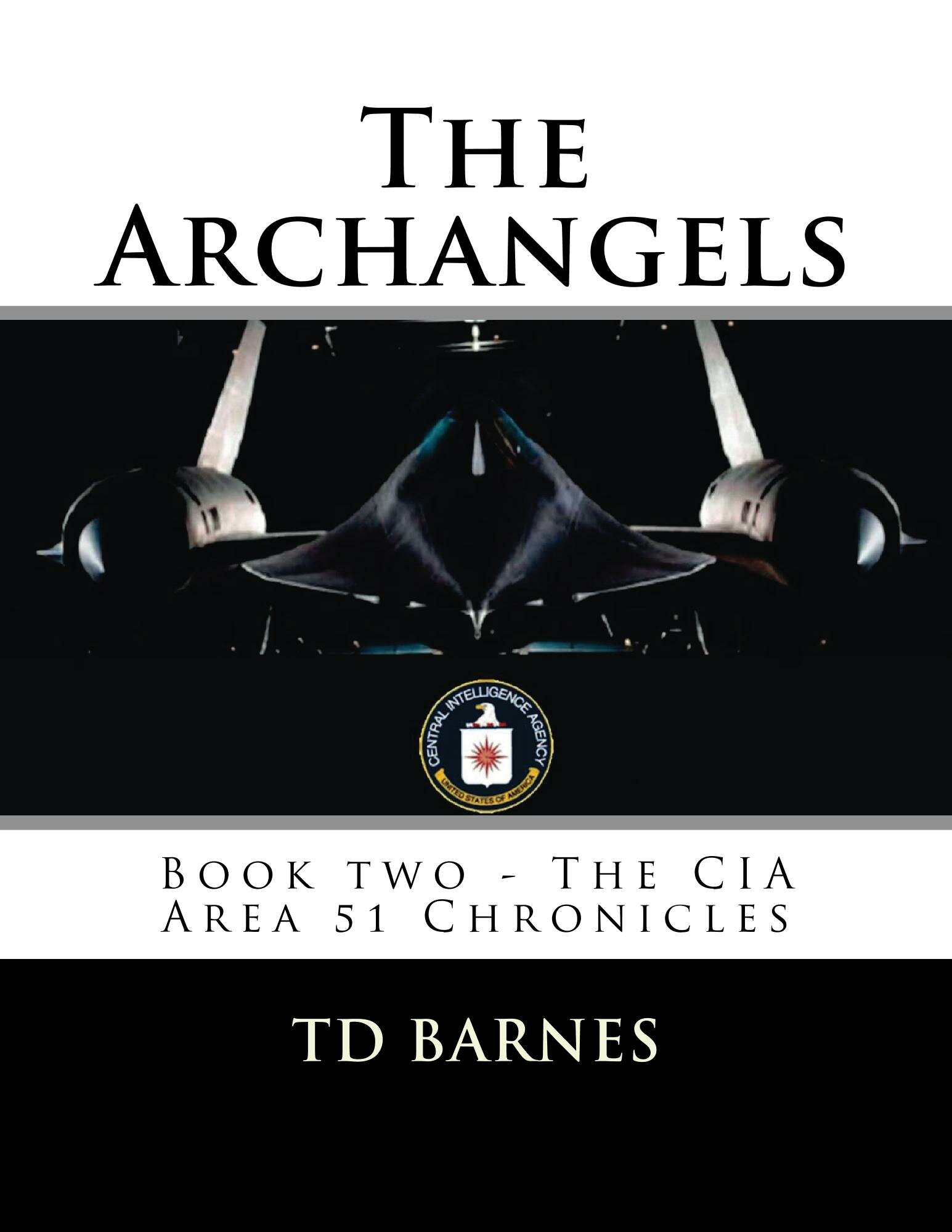 More about General Vojvodich and his time at Area 51 with the CIA
B&N ISBN: 9781987016703
Amazon ISBN-13: 978-1547084876
Smashwords ISBN: 9781370283231
Apple ID 1447815807
402 pages
The combination of the shootdown of the U-2 over Russia in 1960, Russia’s moving into Cuba, and the war in Vietnam placed a heavy load on the Central Intelligence Agency to develop a replacement spy plane, unlike anything the world had ever seen before. The CIA established its station at Area 51 under the CIA’s new Directorate of Science and Technology where it developed America’s first stealth plane, the A-12 Archangel. Designed with slide-rule technology, the CIA produced what is still today the fastest and highest-flying manned air-breathing aircraft ever.
The A-12 plane spent 18 months on a pylon situated on the dry Groom Lake during RCS, radar cross-section evaluations by the CIA’s special projects team at Area 51. It flew 2,850 secret flights out of Area 51 during the flight tests known as Project OXCART. From Area 51, CIA Director Helms deployed people and three planes to a CIA outpost in Kadena, Okinawa where the CIA operationally overflew North Vietnam, Laos, Cambodia, and North Korea during Operation BLACK SHIELD before the Air Force replacing it with the SR-71, the fourth member of the Blackbird family.
Buy and Enjoy
AMAZON
| USA |
